

Attention, holiday shoppers! Early Decisions are coming!
It's early December. But before Santa makes deliveries, some colleges will drop Early admissions decisions down their applicants' portals. Just like every December, I watch and wait along with students and parents to see who might be having an especially happy holiday. At the same time, college-related issues are gaining steam in the media - everything from college growth to double majors to no college at all! Read on, then allow time to get in the holiday spirit.
🎄🎄🎄🎄
Early Decision: Trends and Issues
In its release of The Use and Abuse of Early Decision in College Admissions, which focuses on 2024-25, the Class Action Network addresses "a growing tendency of highly selective colleges and universities to enroll larger portions of their freshman class through early decision, which puts students from low- and moderate income households at a disadvantage given the higher rates of admission for early decision." Moreover, author James Murphy projects that the percentage of entering classes accepted Early will rise yet again.
In the report, the colleges cited as taking the biggest chunk through ED included Davidson (69 percent) along with Middlebury and Emory (68 percent). Murphy also presents a metric called "ED Advantage," which for aggressive Northeastern is 11X! In other words, the ED rate is 11 times that of the RD rate! (Note: A student who states they'll start at an alternative campus can do very well with Early Action as opposed to ED at Northeastern.)

🎁🎁🎁🎁
Grade Inflation Among the Elite
We all know that grade inflation in high schools is making admissions decision-making even harder. But what about grading at the college level? Recently, the Wall Street Journal profiled grade inflation at mighty Harvard. It seems that an internal report at Harvard "includes recommendations to curb grade inflation and restore rigor." It even calls for showing median grades on a student's transcript! In the Journal article, a psychology professor states that his class performance has declined, yet grades are inflated to keep up the course's popularity! Diligent students, understandably, are frightened by the prospect of lower grades.
According to the article, the grade discussion has been going on since the late 1800s. About 20 years ago, Princeton tried to stem the tide, but the idea didn't take hold. Apparently, it led to inflated stress levels.
🎄🎄🎄🎄
U-M and AI: It's All Coming Together for OSU
In last month's blog post, I shared a bit about Fernando Mendoza, Indiana University's starting QB and a Heisman candidate who will have his MBA at the end of his IU Kelley journey. We now know his Big 10 opponent, and that's Ohio State, led by another Heisman contender in Julian Sayin. The Buckeyes, 27-9 victors over rival Michigan last Saturday, are favored slightly in next weekend's contest

Ohio State is also making waves in the AI space. Last month, OSU announced a Faculty Hiring Initiative that will increase AI staff by 100 over the next five years. According to a release, OSU already has "approximately 300 scholars who already are innovating with AI in their respective fields." Moreover, Ohio State announced that grads starting with the Class of 2029 will be "fluent in applying AI within their field of study." The university will also have an AI(X) Hub for "faculty, researchers and students to harness AI for the public good."
🎁🎁🎁🎁
What Should I (Double) Major In? Undecided Students Want to Know!
In last month's blog, I shared a quote from the Wall Street Journal, "Many [parents] don’t know how to advise teens on what to study in college—or whether to even go." Now the Hechinger Report, an education news nonprofit, tells us that "students worried about getting jobs are adding extra majors."The double major discussion starts early, sometimes in my student meetings. Who can blame applicants for asking about it, especially since so many of their colleges request two choices of study on the Common App? In the Hechinger Report, a student from University of Wisconsin-Madison, a favorite of this counselor, was double majoring in international security and journalism, stating: "Having more skills and more knowledge and more majors gives you a competitive edge.” We're told that double majoring is up 25 percent at UW-Madison.
There are many questions here. How many employers really hire based on major, or are connections and skills more important? Are double majors popular at certain colleges because there may be fewer requirements or more interdisciplinary choices? Or, as the article suggests, could the number have risen because a college has no minors at all, the case at UW-Madison? Will certificates lessen the growth of double majors?
🎄🎄🎄🎄
A College Alternative, Tech Bro Style
If your student had successfully gained admission to a highly selective college, then turned it down in favor of no college at all, how would you feel? In a recent article, the Wall Street Journal profiled an alternative program launched by Palantir, which welcomed a cohort of 22 teen fellows. These individuals, selected from a pool of 500, attended lectures and even did some reading before they were assigned fieldwork, including accompanying more experienced "forward-deployed engineers" to client sites. (You can't make this up.) Program fellows may not even get an offer from Palantir, while others who are offered jobs may opt to reapply to college instead of joining the hot tech company. Now that would be an impressive gap-year credential, wouldn't it?
🎁🎁🎁🎁
Can Job Pressure Ruin the College Experience?
According to the Wall Street Journal, "2026 will be the worst college grad market in five years." With corporate layoffs and reduced hiring, what's a prospective college grad to do?
At highly selective colleges, the pressure to conform builds as early as freshman year. Here's what the Journal tells us: "Many students arrive at prestigious colleges with little idea of what an investment banker or consultant does, but roughly a third of them who enter the workforce wind up in finance or consulting jobs after graduation—and another chunk joins big technology companies."
The process, we learn, is known as "career funneling" because the undergrads are led down particular career paths, with certain companies paying a fee to colleges for the names of talented students they can target. At Yale, 20 percent of grads will work in finance; at Harvard, over half the career-bound seniors are heading into finance, tech or consulting. To be fair, the article reminds us that the path is life-changing for students from certain demographics.

🎄🎄🎄🎄
Now Trending: Building Bridges
There it was in last week's WSJ: an article on a favorite topic: supplemental essays! Specifically, author Roshan Fernandez explored what college admissions readers were supposedly looking at in response to prompts focused on "tolerating other viewpoints." Actually, prompts with this theme have been around a while and, believe me, they're no favorites of my students. But I was surprised to see NYU's bridge-building prompt included as strictly a "disagreement essay." Instead, unCommon students applying to NYU tend to explain how they would use their skills to help communicate with those from different cultures and circumstances.

"We are eager for you to tell us how your experiences have helped you understand what qualities and efforts are needed to bridge divides so that people can better learn and work together."
🎁🎁🎁🎁
Roar, Lion, Roar! Columbia Goes for Growth.
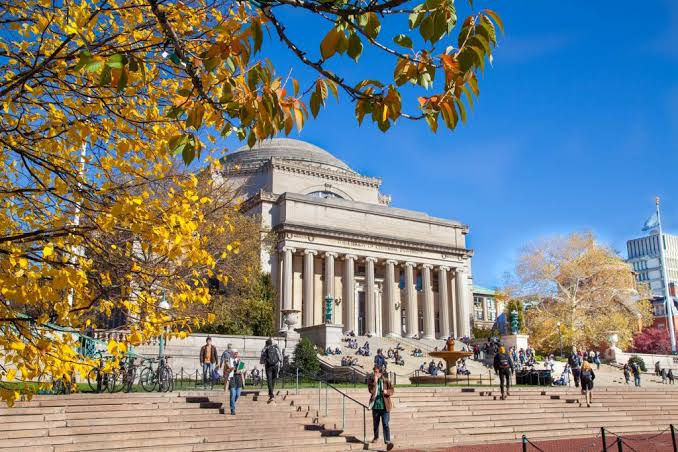
It's been a tough couple of years for Columbia. Now, as reported in the Columbia Spectator, it's time for the Lions to roar back. The university is contemplating expanding the size of both Columbia College and the School of Engineering and Applied Sciences - maybe by as much as 20 percent. Columbia's freshman class grew over this past year, including a larger-than-normal number off the waitlist. The university official in charge of policy and planning declined an interview, yet the Spectator gathered numerous comments about changes that would have to accompany successful expansion as opposed to "unplanned growth." Columbia is expected to announce changes by . . . its ED notification!
🎄🎄🎄🎄
This December, try to find a sense of calm with your favorite people and traditions. January tends to be quite the month in college counseling, so if you have questions about your student's journey, reach out before the holidays.


Comments