

In July, Which College Admissions, Testing and Financial Issues are Hot?
It's the Fourth of July as I write this post, and the day is as hot as a firecracker. Hopefully, you're by a comfy body of water, not stressing about college apps and admissions issues. Yet there's just so much to follow, with AI and curriculum, Early application options, testing considerations, college business models and tuition hikes making headlines. With all this going on, how can your applicant sparkle?
🇺🇸 🇺🇸 🇺🇸 🇺🇸
AI: Sparking the Confusion
An Inside Higher Ed survey indicated that most students are worried about their dependence on AI. And while they "are most enthusiastic about AI as learning support,” their colleges face a challenge: to separate themselves from the pack by how they address AI in the curriculum. As noted in a recent NY Times article, "universities are setting up programs so quickly that researchers are struggling to track them. At least 74 A.I. majors and 89 minors are available on American campuses." (This came from a Northeastern study.) Indeed, "just one in 10 students [surveyed by Inside Higher Ed] say that their institution is handling AI’s rise very well, in a thoughtful and proactive way."
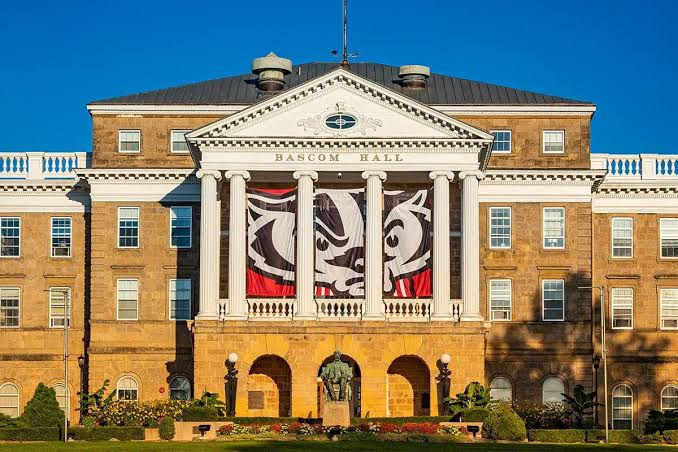
Taking an important step, the University of Wisconsin-Madison has established a new College of Computing & Artificial Intelligence through which it will offer statistics, computer science and information programs. Prospective students for the new college will start in the College of Letters & Science and move over to the new college in 2027-28. While some Badgers will pursue those three disciplines as majors, others may opt to receive certificates in Statistics, Data Science and Computer Science.
Hungry for more on AI in Silicon Valley? Try Santa Clara University's AI Kitchen: "a place where students from any major learn to use AI tools through real projects, industry connections, and peer collaboration." SCU tells students they can "just show up" on Friday afternoons. As a CS professor explained to Inside Higher Ed, “That metaphor then signals that we’re going for something that’s more familiar, communal and creative, as opposed to perhaps an AI hacker space.”
🧨 🧨 🧨 🧨
Two Former Testing Greats Combine. Oh, Snap!
Who saw it coming? in a deal announced just last week, ETS, a (former) king of testing, has acquired a struggling ACT. Think about it: ETS no longer administers the SAT; that's College Board's responsibility. ACT experienced a significant loss in market share after College Board beat them with its digital, adaptive SAT, which unCommon students clearly prefer over the current ACT. Now, the new testing company gets a shot at domination. As noted in K-12 Dive, ETS is a nonprofit but will run the ACT as a for-profit entity. ACT told the media that it was happy that its career-focused offerings could get a boost through ETS.
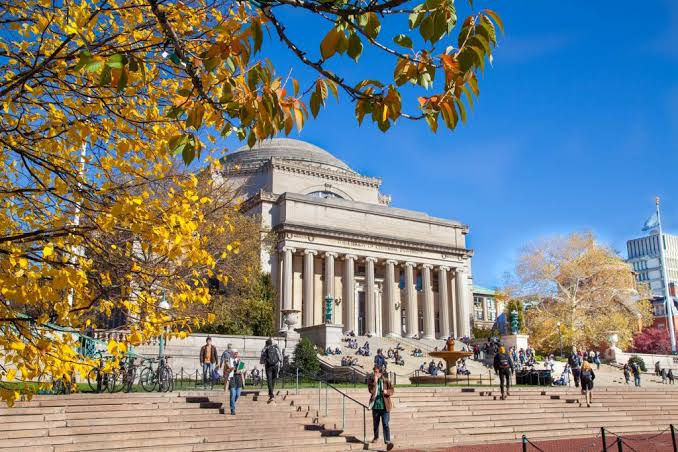
Regarding standardized testing, Columbia became the last of its peer group to reinstate tests, but that requirement won't go into effect until the 2027-28 cycle. As noted in the Columbia Spectator, there's been a marked increase in "SAT and ACT medians of admitted students, since applicants generally only submit scores that are helpful to their application." For its Class of 2030, Columbia's app volume increased to record levels, while that of Yale, Brown and Dartmouth, which switched back to requiring tests, dropped. Columbia has announced plans to increase the size of its freshman class over the next three years: "a modest stepped approach for growth."

n a scathing piece in the Chronicle of Higher Ed, author Jay Vithalani asks, "Just where do SAT scores fit in? No one, outside an admissions office, quite knows what the weighting is, college by college." He contrasts that with the transparency of the U.K. system, which this college counselor has learned all about through the The UK Study Expert. Vithalani adds, “Three A’s at A-level are the floor for admittance to either the Universities of Oxford or Cambridge. This is stated without embarrassment."
Other than Southern and highly selective colleges, most institutions remain test-optional. Vithalani points out that "silence emanates from elite liberal-arts colleges, which mostly remain — apart from the service academies — test-optional. Institutional ambiguity allows Amherst and Williams Colleges to expand their applicant funnel while (one might say) exploiting maximal discretion. 'Send standardized-test scores if you like; not sending them won’t hurt you' is the vague signal."
What about your prospective applicant? For the foreseeable future, they should attempt the test to gain another credential.
🇺🇸 🇺🇸 🇺🇸 🇺🇸
2026-27 Essay Prompts Start Popping Up (or Not).
In my ebook Supplementing the College Supplement, I explain that supplemental essays allow candidates to display their knowledge and fit. Yet with AI and app volumes soaring, some colleges are letting them go. The latest is the University of North Carolina at Chapel Hill, joining the likes of WashU and UVA.

As colleges eliminate required essays, what will happen with their supposed holistic review? Crackle!
🧨 🧨 🧨 🧨
ED at U-M: Just for All?
The University of Michigan, which invited students to apply Early Decision for the first time in 2025-26, is continuing the practice in the next cycle. As addressed in Inside Higher Ed, U-M's senate called out the practice as unfair, though a Michigan official made known that its financial-aid package comes within a week of an Early acceptance. Another public research university, UVA, added back ED round in 2019. Remember: colleges are businesses that need to fill their seats.

🇺🇸 🇺🇸 🇺🇸 🇺🇸
While U.S. Tuitions Soar, Some Universities' Finances Crack.
What's going on with U.S. colleges' sticker prices? As reported in the Independent, at least 16 U.S. universities have tuition and fees close to or exceeding $100,000. In order to be attractive to students, universities invest in fancy dorms and other amenities - and that includes public research universities that want to remain attractive to out-of-staters. As explained in the article, many students don't pay the sticker price, though others are willing to pay full in exchange for prestige.
Then there's Syracuse, a favorite of unCommon students who want to study everything from sports management to education. 'Cuse is going public about some financial issues, admitting to a deficient and scaling back of unprofitable programs, many of which you've likely not heard of. As addressed in Higher Ed Dive, Syracuse, fell short of enrollment targets.

🧨 🧨 🧨 🧨
Blue Devils Dive In
At Duke, the Trinity College of Arts & Sciences is finding a new way for students to begin their freshman experience: at the Duke Marine Lab in Beaufort, North Carolina. Called Duke Embark, the program will be available to incoming Trinity students beginning in Fall 2027. The Marine Lab is actually part of Duke's Nicholas School of the Environment, where in addition to Marine Science & Conservation, undergrads can pursue Earth & Climate Studies and Environmental Sciences & Policy.
🇺🇸 🇺🇸 🇺🇸 🇺🇸
Is your student really ready to handle the heat of applying? We know how: become knowledgeable about the college process and understand what it takes to differentiate a candidacy. For more, be sure to set up a meeting.

Comments