

Holistic College Admissions: Which Components are Hot, and Which are Not?
It's June. How's Your Common App Personal Essay?
I'm sending reminders to the rising seniors. Sure, it's an exciting month for them, but I don't want this initial part of the college application process to interfere too much with other summer commitments. And with a new month comes more about the issues affecting students and parents, including transparency in admissions, colleges' push to fill seats earlier, standardized testing and curricular developments. Let's look more in depth.
🌹🌹🌹🌹
Application Options: Who Benefits More?
In the college business, it's all about filling seats early - and maximizing yield. According to the WSJ, some institutions accept three or four times as many students in Early versus Regular rounds. The article also underscores what it calls "a long-practiced yield-protection tactic," which is waitlisting or declining "applicants who seem overqualified and therefore unlikely to enroll." That's something I see with unCommon applicants year after year, and why I hesitate to use safety when discussing college lists.
New Ways to Apply Early
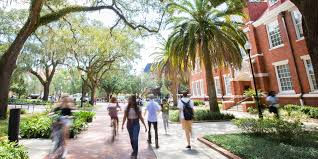
I've written for some time about how top public research universities no longer want to be backups. Following the likes of University of Virginia, University of Vermont and U Michigan, the University of Florida has announced an Early Decision option for the Class of 2031.
The Journal pointed out how UChicago makes it easy for "prevetted" summer-program students to apply while also offering Early Action applicants the chance to switch to ED. I've seen that for quite some time with other institutions and would expect it later this cycle with WashU's new Early Action round.
New Ways to Fuel Matriculations
Some universities offer students a guaranteed transfer if they accept a study-abroad option for their first semester or year. We know that Northeastern does this with its multiple campuses, and recently a student considered an option for Syracuse through Verto Education, which offers study-abroad experiences. This year, Vanderbilt piloted with Verto as well.
🍦🍦🍦🍦
Holistic Admissions: What Components are Hot, and Which are Not?
In most preliminary meetings, I explain holistic admissions to students and parents, explaining how admissions officers use each component as they curate an incoming class. Now that we're entering the 2026-27 cycle, some colleges are reconsidering their priorities.
A classic backs a comeback . . .
It's testing, of course! Following up on its promise to be more transparent, Yale will go back to requiring standardized test scores in the 2026-27 cycle. The Yale Daily News quoted a college dean: “SAT and ACT scores are strong predictors of a student’s future academic performance, and, when considered thoughtfully as part of a whole person review, they can help identify well-prepared candidates, especially those from socio-economically disadvantaged backgrounds.”

Then there's the University of California, which has been test-blind, that is, it cannot use SAT or ACT scores in making admissions decisions. Yet professors are finding that STEM students don't have the requisite math skills, so they're calling for reinstatement of testing for those applicants! As relayed in the LA Times, "600 University of California faculty members . . . [are] saying that six years of test-free admissions has not reliably assessed readiness and professors are often teaching middle school math to incoming students. Without standardized testing in admissions, professors said they don’t know whether incoming students can handle college-level math.”
While a favorite loses traction. . .
My students know how much I love their essays - and colleges that value writing. So I'm disappointed when colleges drop their supplemental essay requirements. A few weeks ago, the University of Georgia announced that it was removing the supplemental essay requirement, though maybe they just should've changed the prompt. (Last year's question: "The transition from middle to high school is a key time for students as they reach new levels of both academic and personal discovery. Please share a book (novel, non-fiction, etc.) that had a serious impact on you during this time. Please focus more on why this book made an impact on you and less on the plot/theme of the book itself (we are not looking for a book report)."
Then there's Tulane, perhaps the most aggressive marketer after Northeastern, which hired away Tulane's admissions and financial aid director. A few weeks ago, the Green Wave shared on an Instagram post: "We've removed the Tulane supplement essay." Here's what Shawn Abbott, VP for Enrollment Management and Dean of Admission had to say:
"We've made the decision to pause this question for a few reasons including: 1. Quite frankly, the evolution of AI tools and college consulting has compromised our ability to discern which "Why Tulane?" responses are artificially polished by technology (or consultants); 2. We're concerned that some viable candidates (particularly in academic areas we are seeking to grow) are passing on Tulane to avoid this question; and 3. More frequently, responses to this question are less and less influential in our decision-making process. While it may feel good to ask this question (for both applicants and to admission officers alike), responses to this question are increasingly rare in helping to make final admission decisions."
Get real, Shawn! If candidates you want pass on the question, they're not serious about Tulane!
🌹🌹🌹🌹
The Prestige Trap: Does Your Student Really Want Stanford?
Too often, students and parents are drawn to branding, often without ever going on campus. So I was quite interested to read Theo Baker's take on Stanford, which is made loud and clear in his new book, How to Rule the World. Baker, just 22 years old, has quite the writing prowess - and awards to match. (His parents are also accomplished journalists.) But he viciously calls out Stanford for mismanaging student life and extracurriculars while it serves as a proving ground for startups in Silicon Valley. The message for parents is clear: Make sure your student's list is fueled with colleges where they will thrive. Do everything to check out the climate on campus.

🍦🍦🍦🍦
How Colleges are Powering Up AI
What's a blog post without a mention of AI? Regardless of how you feel about the technology, your student must learn more about the strategic use of AI and its integration in the curriculum.
As reported in Inside Higher Ed, UVA's library is teaming with the College of Arts & Sciences to pilot an AI Literacy and Action Lab that will "equip students, faculty and staff with structured, evidence-based AI competency embedded directly into courses across disciplines." The library's director put together a framework that focuses on "five core competencies: technical knowledge, ethical awareness, critical thinking, practical skills and an understanding of AI’s societal impact." This spring's roll-outs included a course developed by an economics professor and three librarians along with a lesson-planning project at a local high school.
In the meantime, Tufts now offers a minor in AI Development available to students in the School of Arts & Sciences, the School of Engineering and the School of the Museum of Fine Arts. (SMFA became part of Tufts in 2016.)
🌹🌹🌹🌹
Grades: What Do They Really Mean (for the Job Market)?
Earlier, I mentioned Yale's recent report, which also tackled grading: “Grades exist to communicate what students have learned. At Yale, as at many peer institutions, they no longer do.” At Harvard supposedly 60 percent of grades are As, triggering a movement to cap the number given out in the future. Meanwhile, the Wall Street Journal reported even more grade inflation in this ChatGPT era, affecting companies that look at grades when making hiring decisions.
Grades aside, do employers get students with the requisite skills for success in the workplace? A consulting executive quoted in Inside Higher Ed believes that initiative, communication and teamwork are needed. According to author Scott Carlson, "It’s those skills — but also behaviors and attitudes — that companies are looking for: curiosity, a penchant for problem solving, social and cultural awareness, the ability to handle conflict, the willingness to question assumptions yet still assert leadership and decisiveness at the right moments."
🍦🍦🍦🍦
As we close another academic year, I am filled with gratitude for the incredible grads and their parents from whom I've learned so much. Congratulations to all of you! For parents of rising sophomores and juniors - or those who just want to know more about building a successful candidacy or finding the right school - be sure to schedule a call or advisory session.


Comments